


Your Docs Are Always Running Behind. Here's How to Close the Gap.

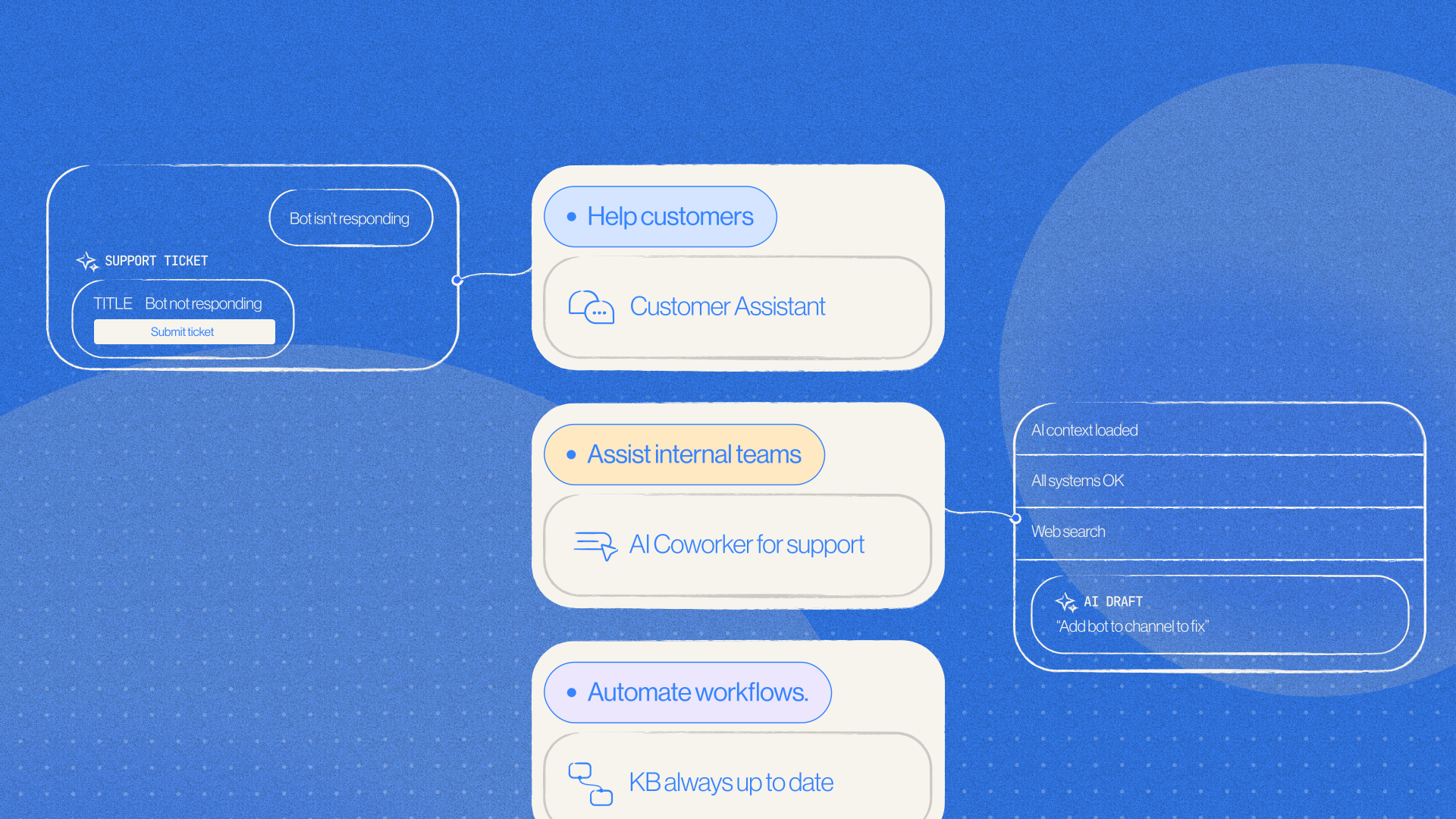
Human support agents deal with edge cases daily. Much of it never reaches the docs. Close the ticket-to-KB loop so grounded answers stay current.
AI assistants only understand published docs; ticket-only answers leave edge cases uncovered.
Picture this: a senior technical writer on your team spends two hours this afternoon updating the onboarding guide. She's thorough, the article is good, and it ships. Meanwhile, over in support, a rep just spent 45 minutes walking a customer through an edge case that the guide doesn't cover. The customer got their answer. The rep moved on to the next ticket. Nobody told the writer.
Next week, a different customer hits the same edge case. Opens a ticket. Same 45 minutes. Same answer.
This is the version of documentation debt that never gets prioritized, because it's invisible. Nobody files a bug saying "our docs are missing this." They just open a support ticket instead. And the gap between what your support team knows and what your documentation says keeps widening, quietly, every single day.
The problem with a documentation-grounded AI assistant
When you deploy an AI assistant that's grounded in your knowledge base, you get real value immediately. Users ask questions, get accurate answers sourced from your actual content, and don't need to open a ticket. For everything your docs cover well, it works exactly as promised.
But your docs are a snapshot. The assistant can only answer what's in them. And the moment a user asks about something that lives in a closed ticket instead of a published article, one of two things happens: the assistant says it doesn't know, or it guesses. Neither builds trust.
The hard part is that the knowledge you're missing isn't exotic. It's the edge case from a release six months ago that generated a surge of tickets and then just became tribal knowledge on the support team. It's the integration quirk that every rep knows how to explain but nobody ever wrote up. It's the three-step workaround that lives in a Slack thread from last spring.
Your support team is answering those questions every day. That knowledge exists. It just never makes it into the docs.
The loop that almost never closes
There's a feedback loop that's supposed to exist: support tickets surface documentation gaps, writers update the docs, the assistant gets more accurate, fewer tickets get opened. Clean, logical, obvious.
In practice, it almost never runs on its own. Closing it manually means someone has to read tickets, recognize what's novel, find the right article to update, write a first draft, and get it reviewed. That's not one task. It's a workflow, and it's the kind of invisible maintenance work that consistently loses to everything else competing for a writer's time.
So the loop stays open. The knowledge stays in the tickets. The docs stay behind. And every week the product ships something new, the gap gets a little wider.
What it looks like when the loop actually closes
Inkeep's Content Writer monitors the support queue in the background. After a ticket closes, it reads the resolution and asks a simple question: did the support rep answer something that isn't in the documentation yet?
Most of the time, the answer is no. The question was covered, the rep followed established guidance, nothing new. The Content Writer moves on.
But when the answer is yes, something different happens. The Content Writer identifies the gap, finds the most relevant article in the knowledge base, and drafts an update. It surfaces that draft to a human reviewer for approval. The writer reads it, edits if needed, approves. The update goes in.
Now every user who asks that question gets a direct answer from the assistant instead of a ticket. The rep who spent 45 minutes on it twice doesn't spend 45 minutes on it a third time. And the writer didn't have to monitor the support queue herself to make it happen.
That's the closed loop: tickets inform the knowledge base, the knowledge base improves the assistant, the assistant deflects more tickets. It runs continuously, from real support signal, without anyone having to manage it.
When your team needs to drive it
The automated loop handles the steady accumulation of knowledge from daily support activity. But docs teams know there's a different problem, and it comes from engineering, not support.
A major feature ships. The authentication flow changes. Pricing tiers get restructured. The onboarding sequence gets redesigned. Suddenly there's a release going out and you're trying to figure out which of your 200 articles mentions the thing that just changed, and whether any of them are now wrong.
This is where your team can talk directly to the Content Writer, through Slack or whatever tool you're already working in.
A technical writer sends a message: "We're updating the webhook setup flow in the next release. The endpoint structure is changing and users will need to re-authenticate. Here's the changelog." The Content Writer already knows the documentation deeply. It cross-references the change against everything in the knowledge base, finds every article that touches the affected flow, and comes back with a prioritized list of what needs updating along with a first draft of each revision.
What makes this different from asking a general-purpose AI to help with docs is that the Content Writer isn't starting from scratch. It already understands how your documentation is organized, what terminology you use, which articles reference each other. It's not generating plausible content from general knowledge. It's updating your specific documentation with your voice and conventions already internalized.
Your team reviews every draft, makes edits, and approves before anything publishes. The approval step isn't optional. It's the whole point: the Content Writer does the audit and the first pass, and your writers do what writers are actually good at, which is judgment.
What used to be a two-day scramble (finding what needs updating, writing the drafts, getting them reviewed before the release) becomes a conversation in Slack and a review queue. Same rigor. A fraction of the time.
What changes after six months
The compounding effect of this is the part that's hardest to convey upfront.
In the first few weeks, you see incremental improvements: specific gaps filled, outdated sections corrected, edge cases documented for the first time. Useful, but not yet transformative.
Six months in, the picture is different. The assistant's coverage has expanded continuously, driven by the actual questions your users were asking, not by a quarterly doc sprint. Deflection rates are meaningfully higher, not because the model changed, but because the knowledge base got better. The questions that used to generate tickets are being answered instantly.
Your team's work looks different too. Less time spent hunting for what needs updating, more time spent reviewing drafts that already exist. The maintenance burden shifts from reactive and unpredictable to structured and manageable.
None of that requires new headcount or a new process. It comes from closing the loop that was always supposed to exist between your support queue and your documentation.
Inkeep's Content Writer turns every resolved ticket and every product release into an opportunity to make your documentation more complete. See it in action: schedule a demo.
About the author

Frequently Asked Questions
The assistant can only reflect what's in your knowledge base. Answers that live in resolved tickets, Slack, or team memory were never written into docs, so the assistant will not know or may guess; neither outcome builds trust.
Closing it manually means triaging tickets, spotting novel answers, finding the right articles, drafting updates, and getting reviews. That is a full workflow, and it often loses to higher-priority work, so the loop stays open.
It reviews the resolution and checks whether the rep documented something that is not yet in your KB. When it finds a gap, it proposes an update tied to the right article and sends a draft for human approval before anything publishes.
Writers can message from Slack (or your existing tool) with what changed in the release. The Content Writer maps that against your documentation set and returns a prioritized list of pages to update plus first drafts, still subject to writer review.
Book a demo at inkeep.com/demo to walk through Content Writer and closed-loop documentation workflows.